The discussion about tariffs has changed a great deal over the last year.
On September 8, 2026, Canada implemented a new round of counter-tariffs on certain goods from the United States, with rates of 15 percent, 25 percent, and 50 percent depending on the product. The categories in question include some apparel and other products that directly overlap with the branded merchandise industry.
For Canadian businesses which are buying branded goods, the first thought that comes to mind is this: What does all of this actually mean for us?

The answer varies, and that is precisely the reason why it is important to have the right supply chain partner.
It doesn’t mean that everything coming from the United States is a product made in the United States.
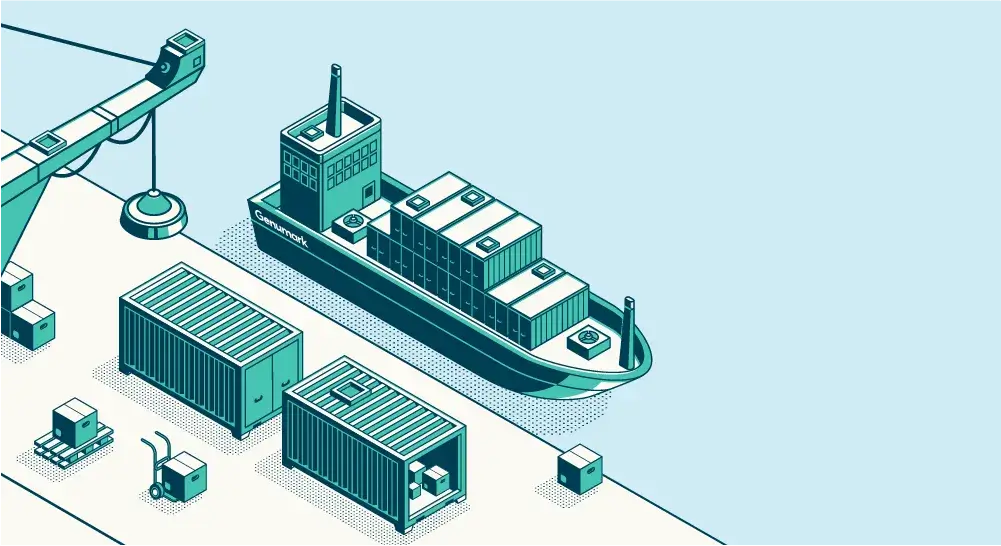
A common misconception about tariffs is that all goods bought from an American supplier are automatically covered by tariffs relating to the United States.
The counter-tariffs currently in force in Canada target products that originate in the United States. The country where a product is shipped and the country where it is manufactured are not always the same.
A jacket sent from a warehouse in Ohio could have been made in Vietnam. The backpack bought from an American supplier might have been produced in Cambodia. Furthermore, a drinkware product might have been manufactured in China and then decorated in the United States.
These differences can materially affect how tariffs are applied.
For an industry like ours, where supply chains routinely cross multiple borders before a finished product reaches the customer, understanding the origin and movement of goods has become increasingly important.
No single tariff applies to all promotional products.
The countermeasures Canada introduced on September 8 include substantial tariffs on some products originating in the United States. For apparel categories relevant to our industry, such as certain cotton T-shirts, pullovers, outerwear, and other garments, a tariff of 50 percent applies.
However, different products may have different tariff classifications, different countries of origin, and different supply chains. Two products which appear almost identical in a catalogue can ultimately have very different landed costs. For instance, consider two simple cotton T-shirts: one produced in the United States and the other made in Bangladesh, both available from the same supplier. The T-shirt made in the United States might face a 50% tariff, while the one made in Bangladesh could have no extra tariff. Even though they look almost the same on the surface, the final price you pay could differ considerably simply because of where each product was made.
That’s why the right approach isn’t to panic about tariffs or make broad pricing assumptions. Our team is here to understand the specific product and find the best path forward.
Because Genumark has an extensive network of suppliers and manufacturers in Canada, the United States, and elsewhere around the world, our team has a range of options. If tariffs become an issue, we can consider alternative solutions based on the specific program.
- Alternative sourcing
Where appropriate, we can identify comparable products from suppliers or countries of origin with different tariff exposure.
- Canadian and domestic options
Our Canadian supplier and manufacturing relationships remain an important part of our sourcing strategy, particularly when domestic production offers advantages in cost, lead time, or supply-chain certainty.
- Product substitutions
Sometimes a small change in product, material, or manufacturer can create a meaningful difference in landed cost without compromising the program’s objective.
- Better visibility
Our team works closely with our vendor partners to understand pricing changes, product origin and other factors that may affect an order before those surprises reach our customers.
- Long-term program planning
For organizations operating large merchandise programs or corporate stores, sourcing decisions can increasingly benefit from being made at the program level rather than order by order.
The more visibility we have into future requirements, the more opportunities we have to build resilient sourcing strategies.
There is no question that the global trade environment has become more complicated. Our job is to make it feel less complicated for you.
That doesn’t mean tariffs will never affect pricing. In some cases, they will. We can understand where those costs come from, identify alternatives when they exist, and give you the information you need to make smart decisions.
Genumark has spent over four decades building relationships with suppliers and navigating an industry whose supply chain has always been global. Today, that experience matters more than ever.
If you have questions about how tariffs may affect an upcoming merchandise order or program, talk to your Genumark rep. We’ll help you understand the options and find the right approach.